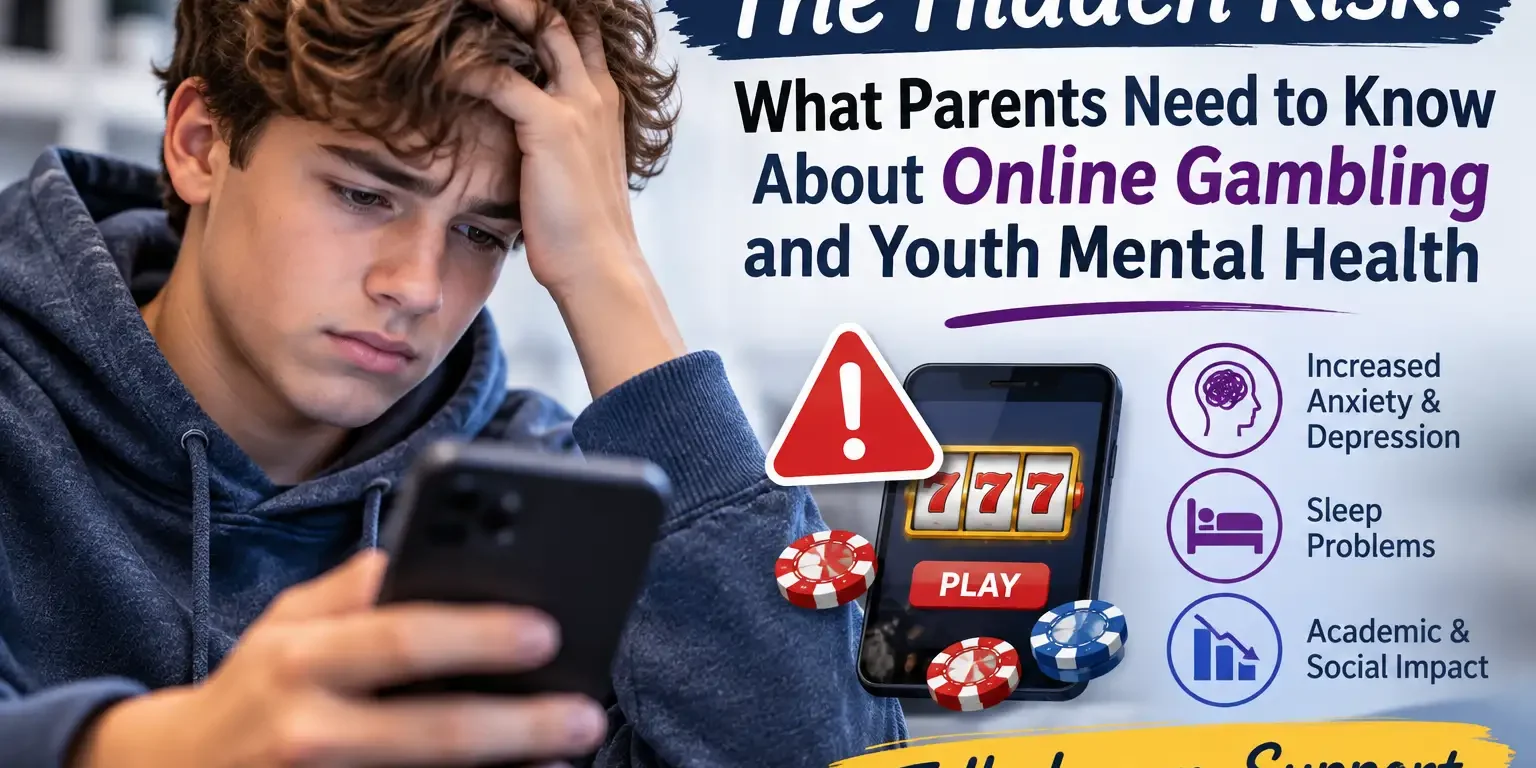
The Hidden Risk: What Parents Need to Know About Online Gambling and Youth Mental Health
by Dr Beth Sherman
Online gambling has become easier than ever to access. What once required a trip to a casino can now happen on a smartphone, often without parents realizing it. From sports betting apps and social media influencers to video games with gambling-like features, young people are encountering gambling in places they may not recognize as risky.
For Megan’s Legacy of Hope, which is dedicated to strengthening the mental health of youth and young adults, this is an important issue to understand.
The Numbers Are Surprising
A 2026 national survey by Common Sense Media found that 36% of boys ages 11–17 reported gambling within the past year. Additionally, research cited by the American
Academy of Pediatrics found that 27% of adolescent boys who gamble reported negative effects, including stress or conflict with family members.
These findings are especially concerning because adolescence is a period of ongoing brain development. The areas responsible for planning, evaluating consequences, and controlling impulses are still maturing into early adulthood. This can make the excitement of gambling, the promise of quick money, and the belief that a win is just around the corner particularly appealing.
Gambling Doesn’t Always Look Like Gambling
Many parents picture gambling as placing a bet on a sporting event. But young people may encounter gambling-like activities long before they ever place a traditional wager.
Examples include:
- Video game loot boxes: Paying real money for a mystery item or reward.
- Virtual casino games: Apps that imitate casino games using virtual currency.
- Sports betting content: Gambling advertisements and influencers promoting betting during sports broadcasts or online videos.
- Peer-to-peer betting: Friends placing bets through another young person’s betting account.
These experiences can make gambling seem like a normal part of entertainment. Research also suggests that exposure to simulated gambling may be associated with a greater likelihood of later gambling with real money.
What Should Parents Watch For?
A young person may not openly admit to gambling. Instead, warning signs can include:
- Becoming unusually preoccupied with sports scores, statistics, or betting odds.
- Money disappearing or unexplained charges appearing.
- Staying up late, neglecting self-care, or struggling academically.
- Withdrawing from friends, hobbies, and activities they once enjoyed.
- Becoming irritable, anxious, or secretive about phone use and finances.
None of these behaviors alone proves that gambling is occurring. However, changes in behavior deserve a closer look, particularly when several appear together.
Start With a Conversation, Not an Accusation
Talking about gambling does not encourage young people to participate. It gives them information they need to make informed decisions.
Use an advertisement, sporting event, or video game as a natural opening. Ask what they and their friends know about online betting. Listen with curiosity rather than immediately criticizing or lecturing.
It is also important to explain that knowing a lot about sports does not guarantee successful betting. Gambling companies design their businesses to make money, and an occasional win does not mean someone can reliably earn money through gambling.
Most importantly, avoid shaming a young person who may already be struggling. Gambling problems can affect mental health, relationships, finances, and self-esteem. Shame can make it harder to ask for help. Professional support may be needed when gambling becomes difficult to control or begins interfering with daily life.
At Megan’s Legacy of Hope, we recognize that protecting young people’s mental health means paying attention to emerging risks—not just the ones we already know. By staying informed, asking questions, and keeping communication open, we can help young people recognize risks early and feel safe seeking support when they need it.
Awareness is a powerful first step toward prevention. Learn More